Jason Mills, PhD
Books and Publications
Reclaiming Leadership Formation for the Whole Church

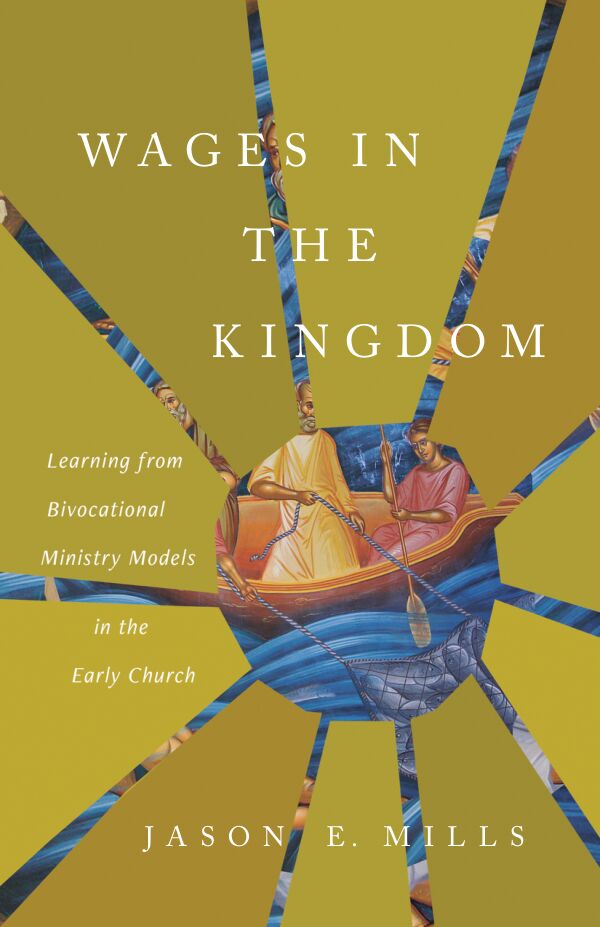
Wages in the Kingdom: Learning from Bivocational Ministry Models in the Early Church
Release Date: May 25, 2027
Publisher: IVP Academic
Author: Jason E. Mills
Relying on New Testament texts and historical context, this book reveals how early church leaders, including Jewish teachers and house church elders, relied on jobs and revenue from property as a means of self-support. The final chapter provides practical suggestions for today’s North American church.
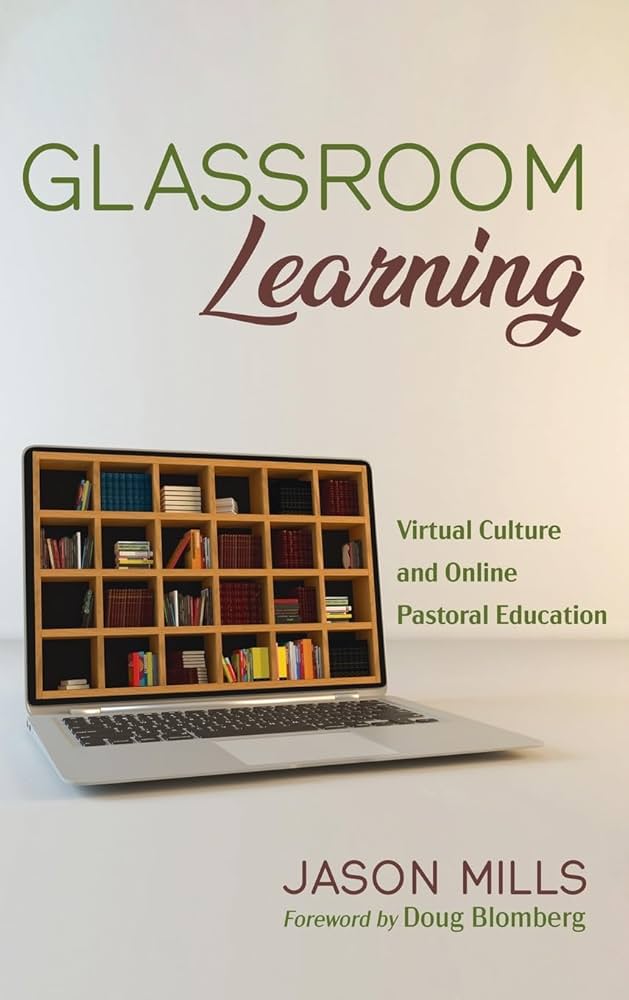
Glassroom Learning
Glassroom Learning: Virtual Culture and Online Pastoral Education
Christian higher education institutions across North America are experimenting with radical shifts in educational content and delivery. Cyber education is becoming a common supplement or replacement for embodied learning, especially since the global coronavirus pandemic.
Most theological educators have embraced the shift online, finding ways to leverage technology to enhance teaching; very few consider how technology itself impacts theological students, particularly those being educated for pastoral ministry. What effect do shifts toward online courses have on those enrolled in programs of pastoral formation? Are future ordinands being adequately trained?
When developed well, Web-based learning can strengthen intellectual virtues. However, it can also inhibit character virtue formation and self-differentiation. Internet usage has been shown to negatively affect social well-being, resulting in higher rates of anxiety, depression, and isolation in students; furthermore, it alters behavior, making learners more distracted, less empathetic, and less able to concentrate and contemplate. Theological schools should, therefore, articulate clearer standards for student formation and strengthen aspects of embodied learning to prepare clergy for ministry in an increasingly complex church and world.
“Jason Mills has produced a timely book on the strengths and weaknesses of online learning for theological education. He wrestles with the goals of theological education which include both the development of knowledge and character formation and how these goals are met or not met with online learning. This book is a must-read for anyone involved in theological education, and I believe, in any form of education. I strongly endorse it.”

Dr. Thomas St. James O’Connor
Professor emeritus, Martin Luther University
“Internet-based distance education in theological education is pilloried by some and celebrated by others. Jason Mills does neither. He provides a valuable map for assessing distance education in terms of theological education goals. While this educational approach is effective for some, it appears ineffective for others, and perhaps least effective at some of the qualities most important for religious leadership. Glassroom Learning provides much-needed analysis apart from advocacy or indictment.”
Daniel Aleshire
Former executive director, Association of Theological Schools in the United States and Canada
“Glassroom Learning is a must-read for theological educators and those serving in accrediting bodies for theological education. Jason Mills challenges the prevailing trends toward online education in training for ministry. While affirming its convenience and accessibility, he examines how online learning is affecting the formation of persons for pastoral ministry and offers much food for thought. A timely and wonderfully written volume!”

Dr. Pamela R. McCarroll
Vice-principal and professor of practical theology, Emmanuel College
Journal of Pastoral Care and Counseling
Mills, Jason. “Is Supervised Pastoral Education (SPE) ‘Substantially Equivalent’ to a Recognized Psychotherapy Program?” Journal of Pastoral Care and Counseling 76, no. 4 (2022): 114-128. https://doi.org/10.1177/15423050221089577.
Using the 10 characteristics of a College of Registered Psychotherapists of Ontario recognized program, this paper examines Canadian Association for Spiritual Care’s SPE program in detail, showing how closely it aligns with the College of Registered Psychotherapists of Ontario’s description of an equivalent psychotherapy program. It concludes by suggesting the College of Registered Psychotherapists of Ontario should embrace Supervised Pastoral Education as an equivalent program and grant memberships to future Canadian Association for Spiritual Care Practitioners.
Non-Peer Reviewed Writing
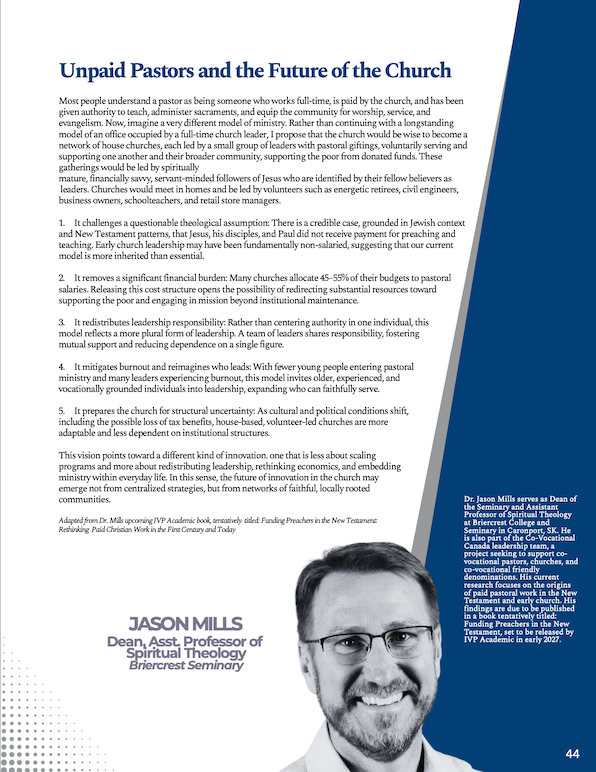
Future of Innovation: Interpretive Field Guide
“Unpaid Pastors and the Future of the Church.” Written contribution to the Future of Innovation: Interpretive Field Guide. MacRae Centre for Christian Faith & Culture. Acadia Divinity College: 44.